
Ovarian Cancer
Are you at risk of Ovarian Cancer?
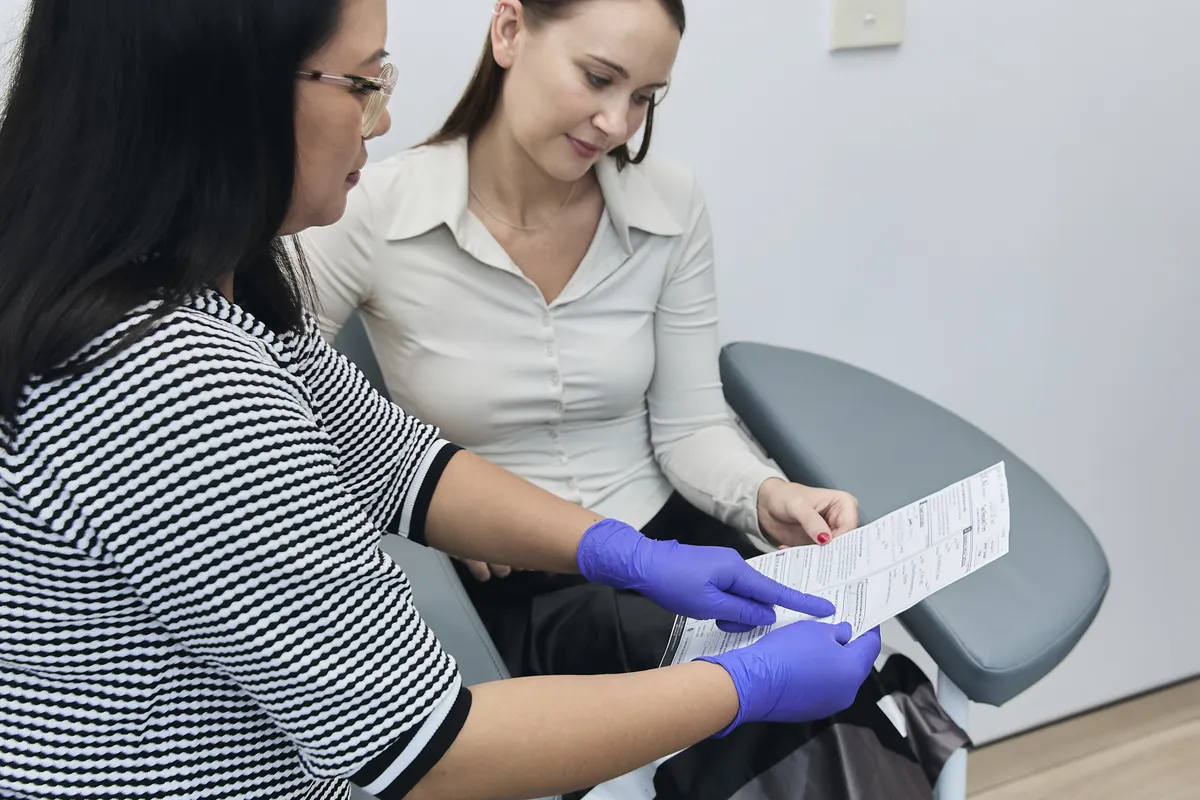
Women with a family history of ovarian, breast, or related cancers can access evidence-based risk assessment through an early detection service, where a doctor will discuss your risk factors with you.8,9
- Simple accessible service
- Doctor consultation
- Australia-wide
Know your risks
What are your risks?
Genetic risk
Some people inherit changes in certain genes that can increase their chance of developing ovarian cancer. This includes gene changes such as BRCA1 or BRCA2, as well as inherited conditions like Lynch syndrome. If you have been told you carry one of these gene changes, or there is a known inherited cancer condition in your family, discussing it with your doctor can help determine whether you may benefit from further assessment.
Family history of cancers
Having close family members with ovarian, breast, bowel, uterine, or related cancers can increase your risk of ovarian cancer, especially if several relatives were diagnosed or if they developed cancer at a younger age. If this applies to you, discussing it with your doctor can help determine whether you may benefit from further assessment.
Symptoms overlap with other conditions5
Ovarian cancer is difficult to detect early because symptoms are often vague or shared with common illnesses.
Limitations of CA-1256
The CA-125 blood test has known limitations, particularly during the early stages of ovarian cancer. Diagnosis can only be confirmed via biopsy.
Take the next step
Know your risk. Act on it.
Ovarian cancer rarely causes obvious early symptoms.5 If you’re at higher risk, earlier assessment gives you more options.
Ready to proceed
Consult with a doctor
Consult with a doctor and see if Early Detection services are right for you. Understand your risk factors.
Telehealth or with your own GP
Want to talk to your GP first?
Send to my doctor
Share this with your GP to discuss at your next appointment.
Free - 2 mins
References
- 1.Cancer Australia. Testing for ovarian cancer in asymptomatic women — background. canceraustralia.gov.au
- 2.Cancer Council Australia. Ovarian cancer — staging and prognosis. cancercouncil.com.au
- 3.Cancer Council Australia. Understanding ovarian cancer. cancer.org.au
- 4.ClearNote Health, data on file.
- 5.The Royal Women’s Hospital. Ovarian cancer — symptoms and risk factors. thewomens.org.au
- 6.Cancer Council Australia. Ovarian cancer — tests and diagnosis. cancercouncil.com.au
- 7.Cancer Australia. Lynch syndrome and ovarian cancer risk. canceraustralia.gov.au
- 8.Ovarian Cancer Australia. Genetics and ovarian cancer. ovariancancer.net.au
- 9.Cancer Australia. Testing for ovarian cancer in asymptomatic women. canceraustralia.gov.au
Ready to take the next step?
Speak with a registered Australian doctor about your risk.